
Bereavement
Supporting a Child Through Dog Bereavement
Practical ways to help children understand, express and remember their beloved companion.
Bereavement
Registered Charity #1188407
Bereavement
Practical ways to help children understand, express and remember their beloved companion.
Reader
For many children, the loss of a beloved dog may be their first experience of grief. Dogs are often more than pets — they are playmates, confidants, protectors and cherished members of the family.
Children often move in and out of grief. They may cry one moment and want to play the next. This does not mean they have forgotten their dog or that they are grieving any less.
Use simple, age-appropriate words. It is usually best to say that their dog has died. Phrases such as “gone to sleep” can be confusing and may cause worry.
Every child is different. Their feelings may come in waves. Let them know it is okay to cry, talk, be quiet, ask questions or need reassurance.
Children may worry they somehow caused their dog’s death. Reassure them clearly and gently that nothing they did caused their dog to die.
Make a memory box, draw pictures, write letters, create a scrapbook, plant flowers or light a candle on special dates.
Familiar routines can help children feel safe when everything else feels uncertain. Offer extra reassurance and gentle hugs where possible.
Children take emotional cues from adults. Allow yourself to grieve and seek support if you need it.
Children do not need us to have all the answers. They need us to love them, listen to them, and walk beside them. Grieving together can help healing begin.
Bereavement
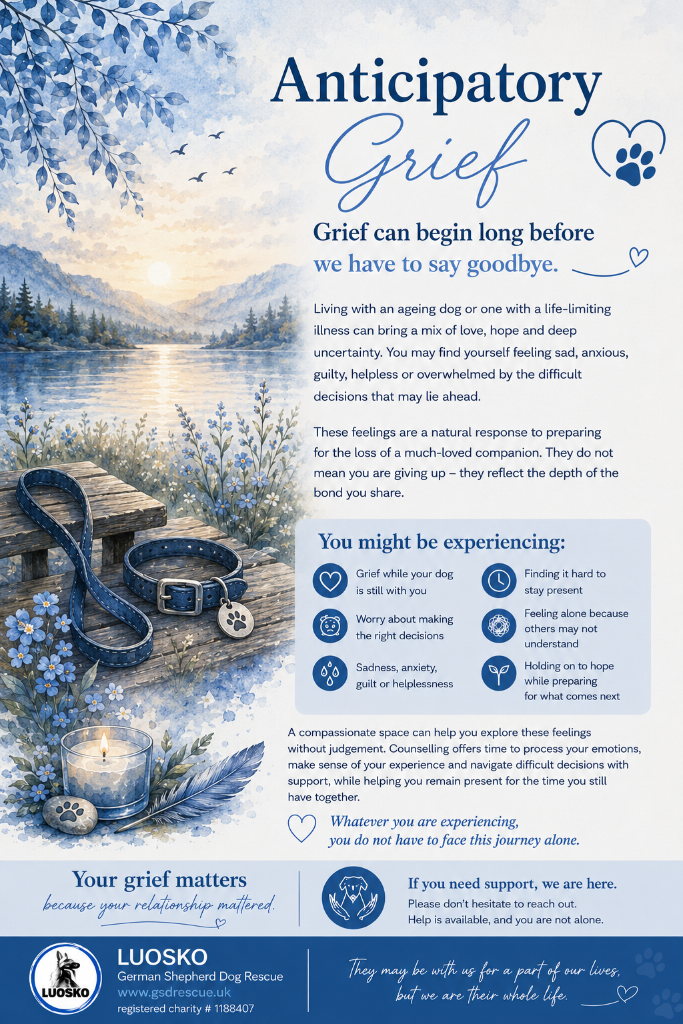
Gentle support for the grief that can begin long before we have to say goodbye.
4 minute read
View Guide
Bereavement
A compassionate guide for the guilt, doubt and self-questioning that can follow end-of-life decisions.
4 minute read
View GuideLUOSKO Guide
Bereavement
Practical ways to help children understand, express and remember their beloved companion.
For many children, the loss of a beloved dog may be their first experience of grief. Dogs are often more than pets — they are playmates, confidants, protectors and cherished members of the family.
Children often move in and out of grief. They may cry one moment and want to play the next. This does not mean they have forgotten their dog or that they are grieving any less.
Use simple, age-appropriate words. It is usually best to say that their dog has died. Phrases such as “gone to sleep” can be confusing and may cause worry.
Every child is different. Their feelings may come in waves. Let them know it is okay to cry, talk, be quiet, ask questions or need reassurance.
Children may worry they somehow caused their dog’s death. Reassure them clearly and gently that nothing they did caused their dog to die.
Make a memory box, draw pictures, write letters, create a scrapbook, plant flowers or light a candle on special dates.
Familiar routines can help children feel safe when everything else feels uncertain. Offer extra reassurance and gentle hugs where possible.
Children take emotional cues from adults. Allow yourself to grieve and seek support if you need it.
Children do not need us to have all the answers. They need us to love them, listen to them, and walk beside them. Grieving together can help healing begin.
We use strictly necessary storage to run this website. We only use analytics and donation tools if you allow us to. You can accept, reject, or choose — rejecting is as easy as accepting. Read the cookie information.