Bereavement
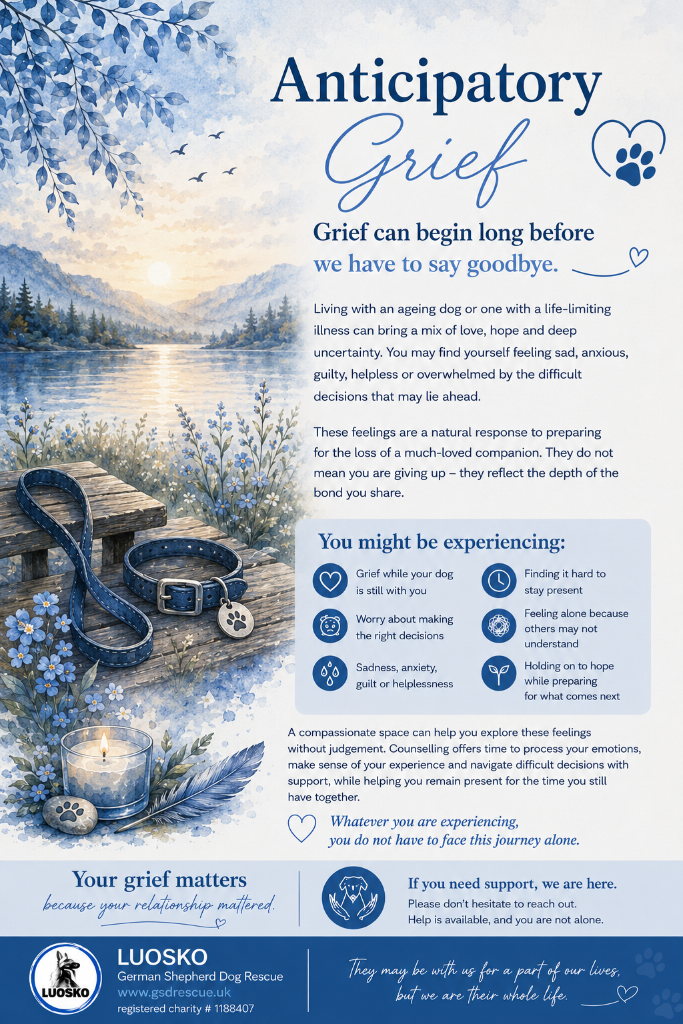
Anticipatory Grief
Gentle support for the grief that can begin long before we have to say goodbye.
4 minute read
View GuideBEREAVEMENT SUPPORT
There is no right or wrong way to grieve the loss of a beloved dog. Every relationship is unique, and every experience of grief is deeply personal. There is no timetable for healing, and however you are feeling today, your experience is valid.
This page is here to offer a compassionate and understanding space where you can find support, gentle guidance, or simply the reassurance of being understood by someone who recognises the profound bond we share with our dogs and the significance of your loss.
Registered Charity #1188407
Gentle support
The loss of a beloved dog can leave an emptiness that extends far beyond their physical absence. They are often our companions, our source of comfort, our daily routine, and a cherished member of the family.
Whatever your experience, your grief is valid, and you deserve to have it acknowledged with compassion and understanding. There is no expectation to “move on”, and no time limit on healing.
Whether you are grieving a recent loss, struggling with euthanasia, living with anticipatory grief, or remembering a companion lost many years ago, we hope you find comfort in knowing that you are not alone.
Reaching out for support is a sign of strength, not weakness. Help is available, and there are people who understand the lasting impact their loss can have.
Understanding dog bereavement
You may experience many different feelings after losing a dog. None of them mean you are grieving incorrectly.
How counselling can help
Support moves at your pace and offers room to speak honestly without judgement.
Support moves at your pace and offers room to speak honestly without judgement.
Support moves at your pace and offers room to speak honestly without judgement.
Support moves at your pace and offers room to speak honestly without judgement.
Support moves at your pace and offers room to speak honestly without judgement.
Support moves at your pace and offers room to speak honestly without judgement.
Guide Library
These first LUOSKO bereavement guides can be viewed online, downloaded, printed or shared with someone who may need a gentle place to begin.
Bereavement
Gentle support for the grief that can begin long before we have to say goodbye.
4 minute read
View Guide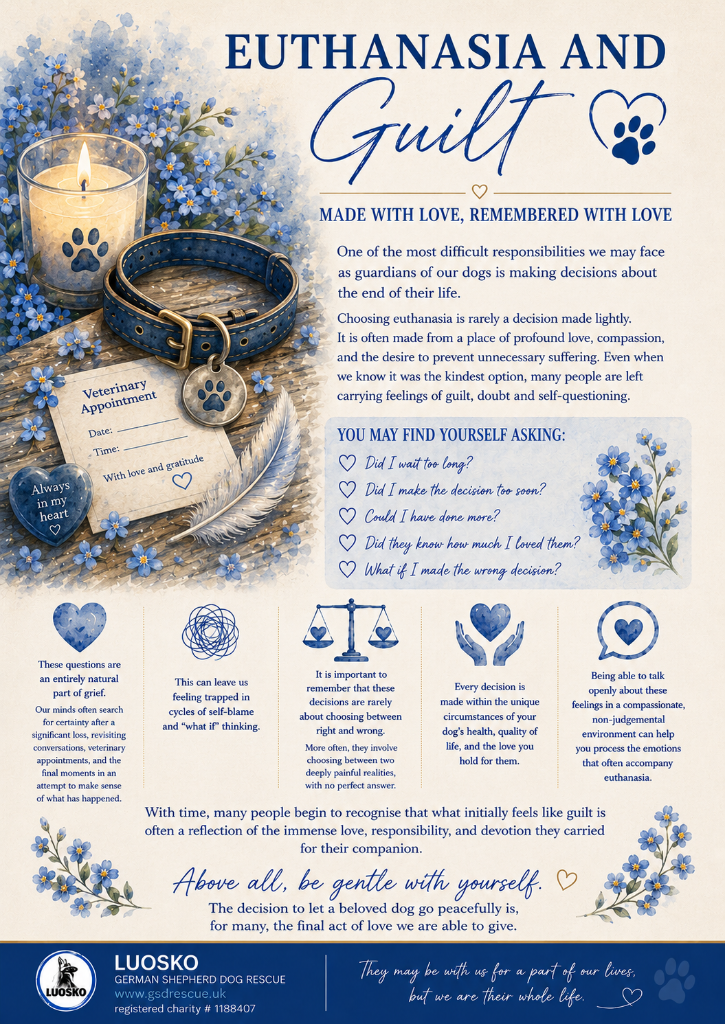
Bereavement
A compassionate guide for the guilt, doubt and self-questioning that can follow end-of-life decisions.
4 minute read
View Guide
Bereavement
Practical ways to help children understand, express and remember their beloved companion.
4 minute read
View GuideFrequently asked questions
Yes. The depth of grief often reflects the depth of the relationship.
Absolutely. Grief does not follow a timetable, and unresolved loss can remain emotionally significant for many years.
This is one of the most common experiences people bring to counselling. These feelings can be explored with compassion and without judgement.
No. Support is available to anyone who feels they would benefit from a safe, understanding space.
When should I seek support?
Remembering with love
“Love does not end when life does. The relationship you shared with your dog becomes part of your story.”
Finding meaningful ways to honour that bond can bring comfort as you move through grief. You may choose to plant something in their memory, write favourite memories down, create a photo album, keep a lead or collar somewhere special, light a candle on anniversaries, or share their story with others who understand.
Healing is not about forgetting your dog or leaving them behind. It is about gradually finding a way to carry both your grief and your love together.
Professional support
A member of the LUOSKO team will read your request personally and respond with care. You do not need to explain everything perfectly.
If professional counselling or external support would be helpful, the team can help signpost you gently without exposing personal contact details publicly.
You can include your dog’s name, when you would prefer a callback, and anything you want us to know before we contact you.
We use strictly necessary storage to run this website. We only use analytics and donation tools if you allow us to. You can accept, reject, or choose — rejecting is as easy as accepting. Read the cookie information.