Behaviour & Training
Slip Lead: Walking On The Right Side & Correcting Behaviour
When to walk your dog on the right side (Q position), how to correct behaviour, and understanding the slip lead as a training tool.
Behaviour & Training
Registered Charity #1188407
Behaviour & Training
When to walk your dog on the right side (Q position), how to correct behaviour, and understanding the slip lead as a training tool.
Reader
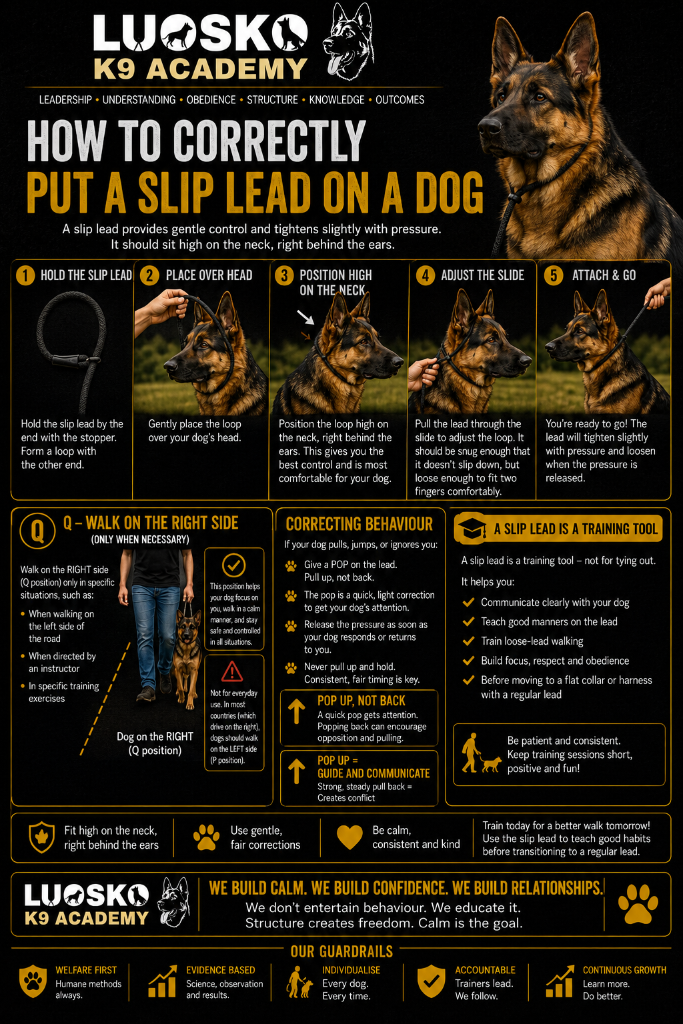
HOW TO CORRECTLY PUT A SLIP LEAD ON A DOG
A slip lead provides gentle control and tightens slightly with pressure. It should sit high on the neck, right behind the ears.
Q — WALK ON THE RIGHT SIDE (ONLY WHEN NECESSARY) Walk on the right side (Q position) only in specific situations, such as: walking on the left side of the road, when directed by an instructor, or in specific training exercises.
This position helps your dog focus on you, walk in a calm manner, and stay safe and controlled in all situations.
Not for everyday use. In most countries (which drive on the right), dogs should walk on the LEFT side (P position).
CORRECTING BEHAVIOUR If your dog pulls, jumps, or ignores you: Give a POP on the lead. Pull up, not back. The pop is a quick, light correction to get your dog's attention. Release the pressure as soon as your dog responds or returns to you. Never pull up and hold. Consistent, fair timing is key.
POP UP, NOT BACK — A quick pop gets attention. Popping back can encourage opposition. POP UP = GUIDE AND COMMUNICATE — Strong, steady pop back = Creates conflict.
A SLIP LEAD IS A TRAINING TOOL A slip lead is a training tool — not for tying out. It helps you:
WE BUILD CALM. WE BUILD CONFIDENCE. WE BUILD RELATIONSHIPS. We don't entertain behaviour. We educate it. Structure creates freedom. Calm is the goal.
Behaviour & Training
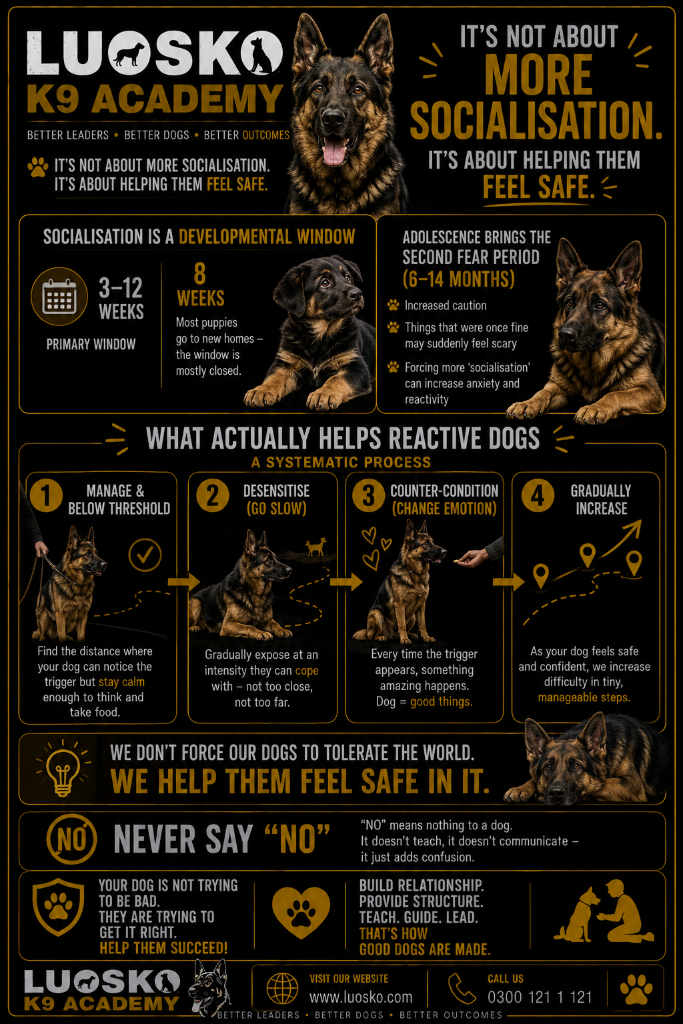
It's not about more socialisation — it's about helping your dog feel safe. A systematic process for reactive dogs.
5 minute read
View Guide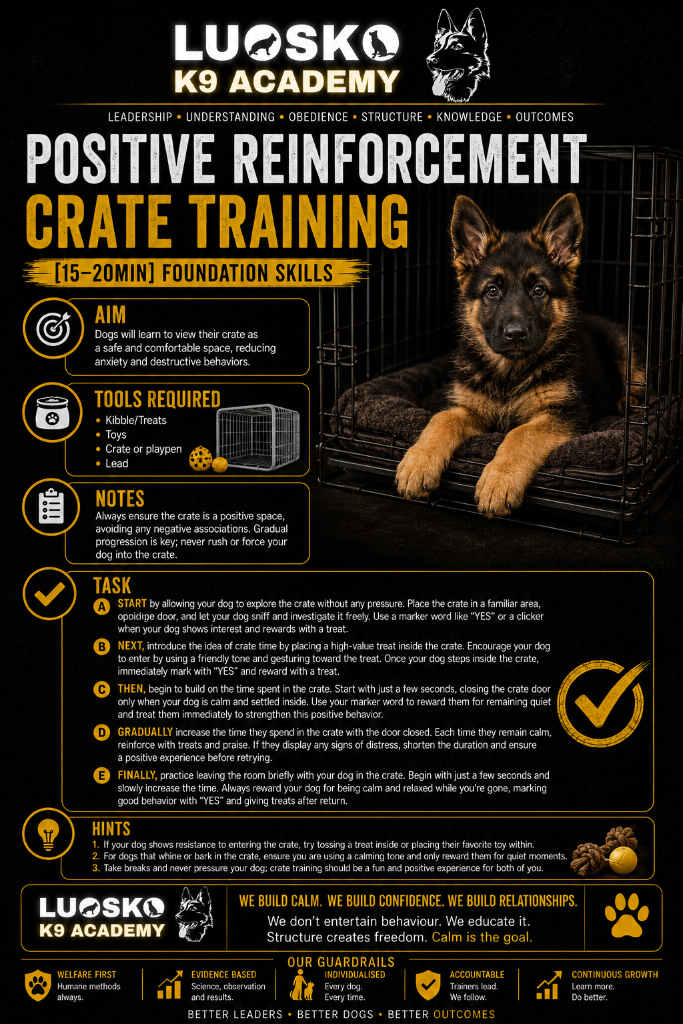
Behaviour & Training
A 15–20 minute foundation skills guide to teaching dogs to view their crate as a safe and comfortable space using positive reinforcement.
5 minute read
View Guide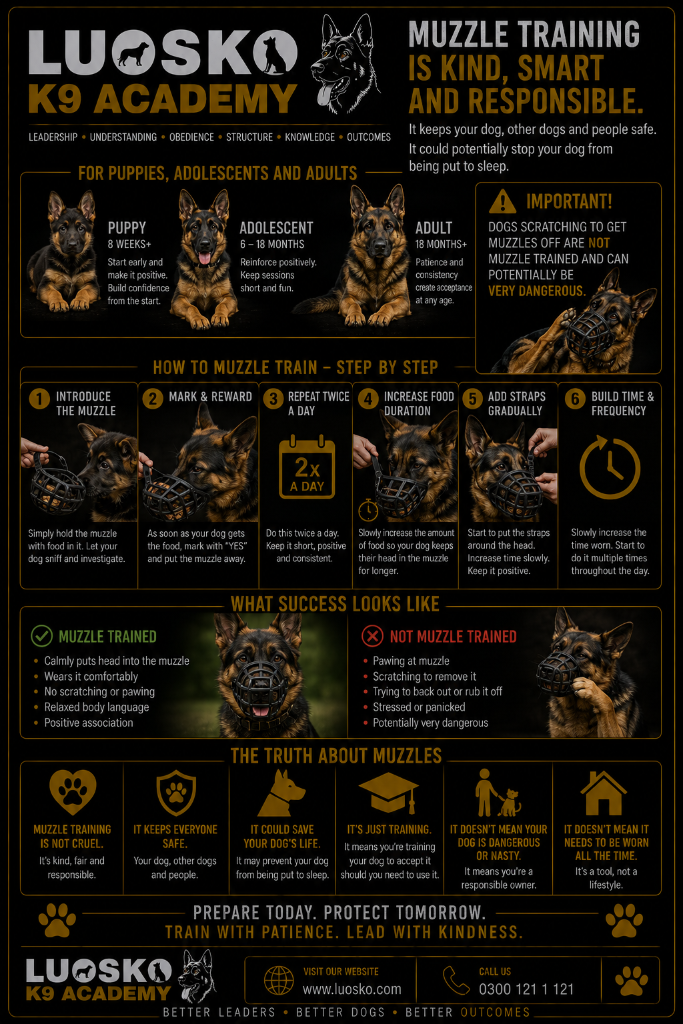
Behaviour & Training
Muzzle training is kind, smart and responsible. It keeps your dog, other dogs and people safe. It could potentially save your dog's life.
6 minute read
View GuideLUOSKO Guide
Behaviour & Training
When to walk your dog on the right side (Q position), how to correct behaviour, and understanding the slip lead as a training tool.
HOW TO CORRECTLY PUT A SLIP LEAD ON A DOG
A slip lead provides gentle control and tightens slightly with pressure. It should sit high on the neck, right behind the ears.
Q — WALK ON THE RIGHT SIDE (ONLY WHEN NECESSARY) Walk on the right side (Q position) only in specific situations, such as: walking on the left side of the road, when directed by an instructor, or in specific training exercises.
This position helps your dog focus on you, walk in a calm manner, and stay safe and controlled in all situations.
Not for everyday use. In most countries (which drive on the right), dogs should walk on the LEFT side (P position).
CORRECTING BEHAVIOUR If your dog pulls, jumps, or ignores you: Give a POP on the lead. Pull up, not back. The pop is a quick, light correction to get your dog's attention. Release the pressure as soon as your dog responds or returns to you. Never pull up and hold. Consistent, fair timing is key.
POP UP, NOT BACK — A quick pop gets attention. Popping back can encourage opposition. POP UP = GUIDE AND COMMUNICATE — Strong, steady pop back = Creates conflict.
A SLIP LEAD IS A TRAINING TOOL A slip lead is a training tool — not for tying out. It helps you:
WE BUILD CALM. WE BUILD CONFIDENCE. WE BUILD RELATIONSHIPS. We don't entertain behaviour. We educate it. Structure creates freedom. Calm is the goal.
We use strictly necessary storage to run this website. We only use analytics and donation tools if you allow us to. You can accept, reject, or choose — rejecting is as easy as accepting. Read the cookie information.